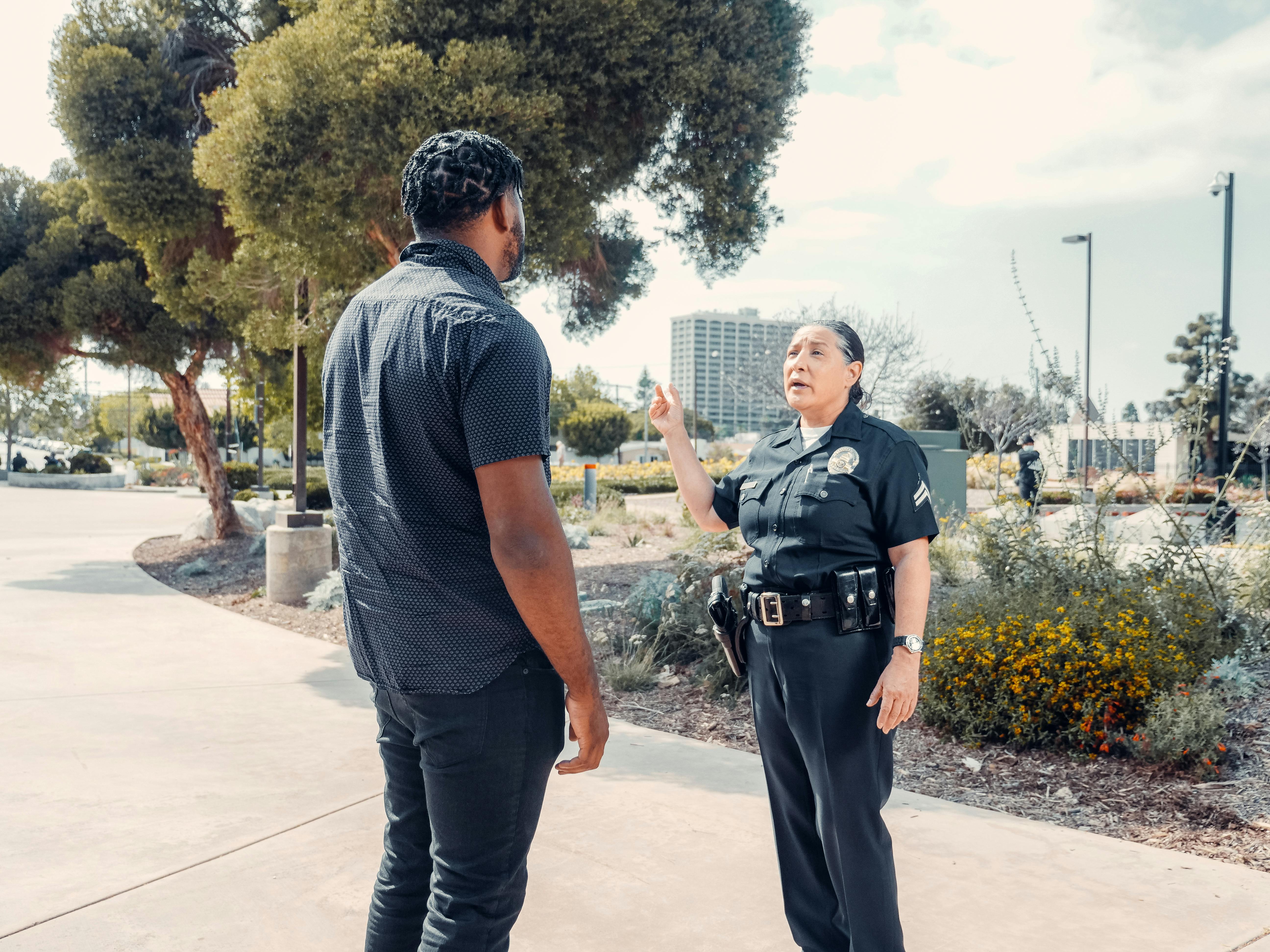
If you plead not guilty and your case goes to trial, you have the right to cross-examine the officer who cited you. Done calmly, it's the most useful tool a self-represented driver has. Done like a TV lawyer, it backfires instantly. Here's the difference.
What cross-examination is actually for
You're not trying to make the officer confess or crumble. You're trying to establish specific facts that create reasonable doubt:
- Limits on what the officer could actually see
- Time gaps between observation and the stop
- Equipment and calibration uncertainties
- Conditions (traffic, weather, light) that complicate the account
One honest "I don't recall" or "approximately" from the officer on a load-bearing fact can matter more than anything you say in your own testimony.
Questions that earn their place
Position and observation:
- "Where exactly were you located when you first observed my vehicle?"
- "How far away was my vehicle at that point?"
- "Was your view unobstructed the entire time?"
- "How many other vehicles were in the area?"
Speed measurement (if radar/lidar):
- "When was the device last calibrated?" / "Do you have the calibration record with you?"
- "Were you trained on this specific model?"
- "How did you confirm the reading was my vehicle and not another?"
Stop signs / signals:
- "Where were you positioned relative to the intersection?"
- "For how many seconds did you observe my vehicle before the intersection?"
- "Could you see the stop line from your position?"
Memory (use sparingly):
- "Approximately how many traffic stops have you made since this citation?"
That last one has a legitimate point — officers cite hundreds of drivers, and their memory of your stop is often mostly a reconstruction from notes. But ask it flatly, without a gotcha tone.
The rules of tone
- Short questions, one fact each. Compound questions get objections and confuse the record.
- Ask; don't argue. "Isn't it true you couldn't see the sign?!" is arguing. "Could you see the stop sign from where you were parked?" is a question.
- Take the answer and move on. If it helps you, the judge heard it. Repeating it belligerently un-earns it.
- Total courtesy. "Thank you, officer" costs nothing and reads as confidence.
What not to do
- Don't ask questions you don't need. Every extra question is a chance for the officer to reinforce their account.
- Don't ask "why did you pull me over and not everyone else?" — irrelevant, and it invites a damaging answer.
- Don't testify while questioning ("Well, I remember it differently...") — save it for your turn.
- Don't expect a dismissal from theatrics. You're accumulating small, factual doubts, not producing a courtroom moment.
Preparing your list
Write 5–8 questions the night before, in order, each targeting one uncertainty in the state's case. Bring the list. If the officer's direct testimony already answered one, cross it off — asking again just re-runs their best material.
Zigpon's free mock court script includes suggested officer questions tailored to your violation type. Build yours →
Educational information only — not legal advice. Trial procedures vary by state and court.